Sunday, September 17, 2017

Charging Stations and the Perseverance of Modern Technology

Will we ever live in a world where charging stations can be found every mile or two down the road? The changing landscape of the automotive industry has proven that through innovation, there is no need to be set in our ways. In other words, for those who have made the statement of never switching from their gas or diesel vehicles to electric should highly reconsider. Charging stations are not only taking the nation, but also the world by storm.

Tesla Supercharger Stations 
According to The People's Daily, “A total of 167,000 charging piles have now been connected to the telematics platform of the State Grid Corporation of China (SGCC), making it the world’s largest electric vehicle (EV) charging network.” This is significant for China as their land mass consists of 9.6 million square kilometers. As for the United States, our footprint of charging stations is fairly small with only 945 Tesla supercharger stations. This is due to the current Tesla sales of only 100,000 vehicles per year. However, with Tesla’s introduction of the new Model 3, which is an affordable model intended for the mass audience, we can expect a large influx of electric vehicles filling our streets here in the United States.


Therefore, this answers our original question. Through innovation we can expect this reality of charging stations to be installed in every street corner as the developing technology and affordability of fully integrated electric vehicles becomes prevalent in our modern society. We need to give the public a reason to consume these electric vehicles. Without the incentive of having the ability to charge your vehicle in a plethora of locations, this evolution in mobility will lack significant growth.

Founder, Robert Slass
I recall in my early years at Rotor Clip Company, when the late founder Robert Slass brought the first Toyota Prius hybrid model to work in 2003. I vividly remember bursting into laughter questioning his sons, now the current co-owners Craig and Jonathan Slass, “what is your father driving?” The car even had a bumper sticker that said “Eat My Voltage.” Of course as an engineer, this was no laughing matter to Mr. Slass as he took pride in new technologies that could eventually sweep the nation.

Now, fourteen years later, Co-owner Craig Slass brought up our foolishness of not realizing what his father was trying to tell us back then. Robert made a statement to his employees and sons that we must keep our eyes on the future of automotive innovation.

In 2003, it didn't necessarily seem like a reality that we would inhabit a world of vehicles run solely on the electric grid. However, technology, especially in the automotive industry, has proven to further exponential growth decade after decade. As a result, this represents the reason why Tesla is such a successful modern automotive brand. Instead of closing off the market, Elon Musk opened the doors to competition, which not only elevates the Tesla brand, but also helps facilitate a major growth for electric vehicles. Overall, automotive suppliers should not be afraid of the changing landscape of this evolving industry, but rather learn how to adapt. 


Robert Slass taught us a very valuable lesson and that is to always appreciate a developing technology, as it can eventually have a major role in our future society.

Evan Slass is a Digital Marketing Communications Specialist for Rotor Clip Company.

Thursday, September 7, 2017

United States to Surpass China as No. 1 Country for Manufacturing by 2020

As the competitiveness of American industry rises, so too does ranking amongst the world’s leading manufactures. Fortune.com notes that as of 2017, the United States is the second most competitive manufacturing economy after China. Global manufacturing executives predict that by 2020, The United States will surpass China as the leading manufacturer in the world.

There has been a drastic rise in competition in the United States and much of that can be attributed to cheap labor being a thing of the past. It used to be a vital point for manufactures, especially in China during the 1990s, where they encouraged cheap labor and required less environmental regulations. Today, technology has drastically reduced the need for additional workers and the keys to success are dependent on advanced technologies, the availability of materials and whether or not intellectual property protections are strong. The United States is ahead of the curb in these 3 categories.  

Future Forecast of Manufacturing until 2020


It is extremely beneficial that manufacturing firms believe the United States is a great place to do business, but there is misguidance when it comes to success having the same impact it did nearly half a century ago. Wages for most workers has been stagnant for a generation and those without college degrees are being granted less opportunity. 

The decline of manufacturing employment should not be considered a political failure, but rather a natural economic process that many industries have gone through in the past. As technology sectors become more sophisticated, it requires fewer workers to get the job done. There may be fewer workers, but it is a good sign manufacturing executives want to do business in America.

To the common citizen, they assume most products aren’t made in the United States anymore, but rather in China, Mexico and Vietnam to name a few and that the only jobs available or even left in America, are in hospitality and the food industry. While it is true the number of jobs in the manufacturing sector has declined, it doesn’t mean that the United States has become deindustrialized. It just means the number of jobs available have declined because efficiency in technology has required less workers.

There are many things that come off as surprising, one of them being that manufacturing is the largest and most dynamic sector of the United States economy. The industry is highly connected to other sectors, such as retail, mining, and transportation and also accounts for nearly 80% of what the private sector spends on research and development each year. Manufacturing provides innovation that keeps other businesses going.


If proof is required that manufacturing is still a viable and healthy industry in America, look no further than Rotor Clip Company Inc., the global leader in the manufacturing of Tapered Section Retaining Rings, Constant section retaining rings, Spiral Retaining Rings, Wave Springs and Self-compensating Hose Clamps. It is a family owned business that has been around since 1957, a testament to their importance among manufacturers. Rotor Clip serves a handful of industries, such as Industrial, Aerospace and Transportation, On/Offshore, Automotive, Commercial Aerospace, Topside/Onshore, Construction and Farm, Space and Defense, Subsea/Seabed, Recreational Vehicles, Railway and Heavy Industry and Down Hole/In Well. It is an example of how manufacturing serves every other industry in America and should be taken more seriously amongst the public.

Another surprising fact is manufacturing output is near a record high. In today’s economy, US factory workers produce twice as much as they did in 1984, but with a third fewer workers. Though there is still a high demand for foreign-made goods, it is believed it will take another 3 years of growth to surpass China.

The important thing to remember is American manufacturing is alive and well and technology has never been as advanced or efficient for the common worker. The only downside is the loss of well-paid jobs hurting the working class. The rise of low-skilled manufacturing in China and other developing nations equates to fewer Americans working in factories. A large percentage of American workers are in the service/producing industries, where inequalities in opportunities, skills and incomes are more apparent. Rebuilding the manufacturing economy to what it once was is not an easy task, but if it’s any indication, by 2020, the United States will be the leading manufacturer in the world and will harness the latest technologies to rebuild the industry, gain workers and begin to earn much more equitable profits.


Justin Arbadji is a Marketing Assistant for Rotor Clip Company 


Monday, August 28, 2017

Stryker's Answer To The Health Care Dilemma: Innovation


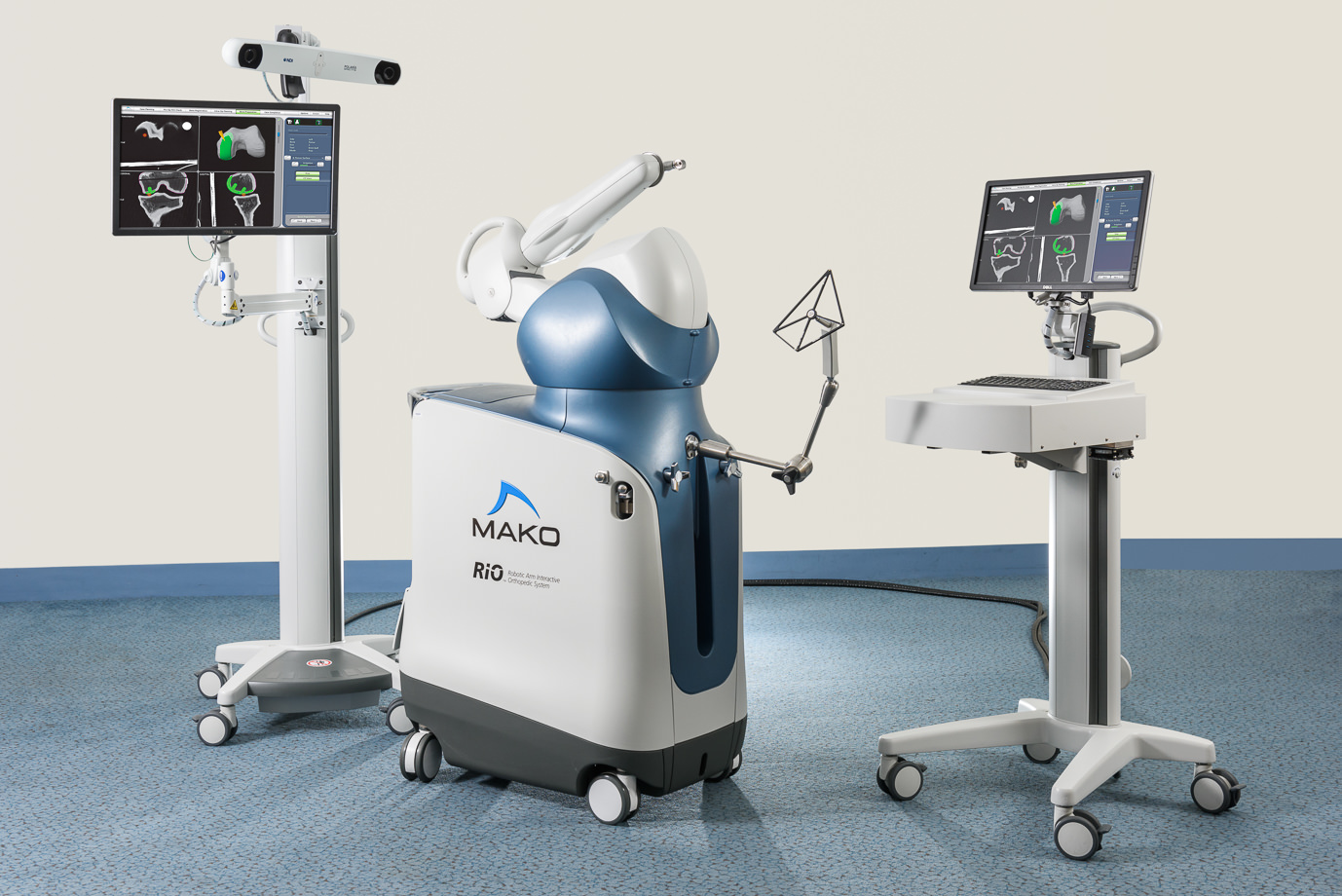
“For us it’s always about innovation,” says Stryker CEO Kevin Lobo. In a recent CNBC interview, Mr. Lobo begins by revealing Stryker’s growth in the market against their competitors, growing north of five percent for the last seventeen quarters. This is especially the case for their knee replacement technology, in which Stryker is using robotic assistance in their operating rooms in order to obtain a more precise placement of the implant. As a result, the patient will come out of a surgery with less soft tissue damage, giving them a faster and less painful recovery process. This major breakthrough in the Medtech industry reveals a promising future for society, as companies such as Stryker are raising the standard for surgical procedures and equipment.
Stryker's Mako Robot

However, Mr. Lobo explained that training is a significant challenge while introducing robotic assistance, as it requires a complete change in behavior among surgeons. The modified procedures entail a new stance in the operating room, along with changing the implant itself. Instead of traditional knee replacements that follow an oval motion, Stryker’s implants are designed to have a natural circular motion. For example, a significant feature of Stryker’s Triathlon Total Knee is their patent pending anatomic radius, which improves the motion of the knee.

Stryker sponsor, Fred Funk, is a prime example of a knee replacement success story. At fifty-four years of age, the professional golfer desperately needed a knee replacement. After his surgical procedure in 2009, he not only returned to golf, but won in the PGA Tour Champions league. Fred Funk’s success stems from both his dedication to return to the game, but most importantly a less invasive surgery, which allowed him to recover quickly enough to return to his normal life.
Fred Funk, Professional Golfer

Meanwhile, about fifteen years ago Gloria Slass, the wife of the late Founder of Rotor Clip Company Robert Slass, was in dire need of a knee replacement . Due to many tennis injuries accumulated over the years, Ms. Slass underwent an excruciating knee replacement surgery in the early 2000s. During her recovery process, she developed arthritis in the knee due to soft tissue damage. Unfortunately, after recovering Ms. Slass had to give up her lifelong passion for tennis due to the severe pain. The lack in medical robotic assistance at this time was the result of a more invasive surgery. Based on the two anecdotes, the evolution in the medtech industry represents a bright future ahead for healthcare, as it is ensures a better tomorrow for patients.

Beyond orthopaedics, another innovative field that Stryker is taking by storm is neurotechnologies. Mr. Lobo explains how their technology can treat two types of strokes that can occur. For instance, in the result of a Hemorrhagic stroke, titanium coils are packed in the aneurism in order to allow blood flow. As for an Ischemic stroke, the procedure would entail the removal of clots from the brain using a stent. Therefore, with the ability to treat an often debilitating condition that results from a stroke, Stryker takes great pride in their advancement in neurotechnologies. Generally, the victim of a stroke is left impaired, which costs the healthcare system a significant amount of money.

That said, although Stryker is not necessarily concerned with how the healthcare system evolves, they are still working to reform it through innovation, as a means of cutting costs for it. Towards the end of the interview, Mr. Lobo stresses the importance of permanently repealing the medical device tax, which has previously been suspended in the past. In conclusion, as an OEM supplier, we here at Rotor Clip fully support and are proud of our fellow American manufacturers for making the world a better place through innovation.


Evan Slass is a Digital Marketing Communications Specialist for Rotor Clip Company.

Tuesday, August 22, 2017

Equipment Manufacturers; Bright Spot In Darkening Market

BE&E's Twin Drag Conveyor is built for biomass processing


 With the rise of renewable energy quickly overtaking fossil fuels in cost, labor force, and investment, the US manufacturing landscape is going through a period of uncertainty as it redefines itself. On one hand, new sources of energy are shirking off old limitations of supply chains, attracting more and more investment and incentive. On the other, however, the models being discarded also serve as the lifeblood of communities all over America, of every kind, and cannot be replaced so easily without detrimental impact on them.

Where does manufacturing fit into this? The US has a multi-faceted quilt of industries embedded with each other, responsible for so much of world demands. Yet, according to many projections, some may be obsolete by the 2030's. In looking at what industries can survive the oncoming changes brought on by renewable energy, one of the most promising fields is equipment manufacturing.

Many companies are already seeing equipment manufacturing as a sector for the US to assert itself into an increasingly accelerating international renewables market it is in danger of lagging behind. One such example is Biomass Equipment & Engineering, a division of Veneer Services. Based in Indianapolis, Veneer Services specializes in manufacturing timber products, but its sub-division BE&E converts equipment products suited for a rapidly ascending biomass industry. Offering products such as chip screens to enable sorting for cyclical models, or twin drag conveyors that are designed for future additions and adaptations, Veneer's BE&E serves as evidence equipment manufacturers are already taking advantage of their flexibility in the renewable market.  

In his op-ed in The Oklahoman, Terex Corporation's CEO John Garrison emphasized his Oklahoma City-based company of 34,000's commitment to making machinery suitable to new global markets. 

"Equipment manufacturers build products big and small", Garrison says, "but what distinguishes our industry is how the men and women in Oklahoma make the equipment that helps improve the lives of people around the world.:
"Our American workers continue to produce world-class products, and they deserve the chance to sell these products in every corner of the globe. That means strengthening trade agreements to grant manufacturers access to international markets; we cannot afford to simply walk away from agreements that form the cornerstone of the international economy. It also means we must continue to strengthen our training and technical education programs to ensure our workforce continues to develop to meet the future needs of manufacturers." 

 Indeed, equipment manufacturing may prove to be the most crucial card the US can play in the global market. Adaptability is proving to be a value for companies in these turbulent times. Equipment manufacturers like Terex can use this distinct advantage better than other industries. While renewable energy is dissimilar in many ways from oil and gas, issues of operations, labor safety, and development, are universal for both. Converting many products and plants to serve the next energy landscape is possible. What is more, with its unique and spanning playing field, it is more doable in the US than anywhere else.

Donal Thoms-Cappello is a freelance writer for Rotor Clip Company.

Tuesday, August 1, 2017

The Jetsons: A Modern Reality?

When it comes to changing trends and technologies in society, we are often faced with this question of what the future holds. This is certainly the case for the automotive industry, as many people tend to fantasize or poke fun at how we are getting closer to entering the reality of the 1960s television show, The Jetsons. This animated series alluded to the idea that the future of mobility would entail flying vehicles and human-like robots. Although we are not quite at the point of levitating vehicles, the automotive industry has proven decade after decade that it is indeed a continuously innovating sector in the market.

With the exception of other automotive companies that have previously released hybrids, the Toyota Prius made headlines in 2000 as the first four-door hybrid sedan in the United States. This was a significant moment in the automotive industry as it created a major conversation among consumers and of course within the industry itself as to how prevalent these sustainable vehicles would become. As a result, the introduction of hybrid vehicles shed light on the alternative sources of power for operating a vehicle. Now, seventeen years later, companies such as Tesla have continued on this trend set by Toyota with the emergence of their fully integrated electric vehicles.

As the US market continues to prevail through the transforming evolution of automotive technologies, it is appropriate to reflect on what the future of driving may hold at last. Scott Corwin, a managing director with Deloitte Consulting LLP, has great insight on this transformation, as he leads the Future of Mobility initiative. In his in-depth article, The Future of Mobility: How transportation technology and social trends are creating a new business ecosystem, Corwin highlights five converging forces of automotive transportation and mobility.

These converging forces include; maturing powertrain technologies, lightweight materials, rapid advances in connected vehicles, shifts in mobility preferences, and the emergence of autonomous vehicles.

Maturing Powertrain Technologies. The emergence of battery operated vehicles will tremendously help to lower emissions by eliminating the use of gas, while offering higher energy efficiency. It’s important to note that the consumer will generally have a high value on the vehicle’s energy efficiency above many other factors.

Lightweight Materials. Advances in chemistry and physics, have proven the ability to eliminate a significant amount of weight for vehicles. For example, Corwin pointed out that the Ford F-150 truck eliminated six hundred pounds by using aluminum rather than steel, while still ensuring safety for drivers.

Rapid Advances in Connected Vehicles. With a plethora of cars on the roads nowadays, safety for drivers is a main concern, especially during extreme weather conditions. Fortunately, the advances in connectivity among vehicles help detect other cars, as well as infrastructure. These are known as vehicle-to-infrastructure (V2I) and vehicle-to-vehicle (V2V).

Shifts in Mobility Preferences. The rise of smartphone applications, such as Lyft and Uber have changed the mobility preferences among Millennials. As a result, this generation doesn’t value owning vehicles, as they have acquired a pay-per-use mentality. For example, “nearly 50% of Gen Y consumers like using a smartphone app for transport.”

Emergence of Autonomous Vehicles. What once seemed to be a technology of the future, self-driving vehicles have now become a reality. Although they are not exactly on a mass-scale production, there are areas where this technology has tremendously improved the driving experience. Generally one of the most significant challenges for drivers is  parallel parking. For example, the BMW i3 has a parking assist option where the car will autonomously park on its own. However, for fully autonomous vehicles, Corwin explained how long-haul trucks could help send and receive products faster by eliminating the driver. This is the result of cutting out mandatory rest stops, thus making the delivery or pickup more time efficient.

NOTE: Rotor Clip will soon be launching Clip Chat, a podcast series that will cover the changing landscape of the manufacturing industry, hosted by Co-owner Craig Slass. Our podcast premier will cover the future of mobility, as discussed above. Check out our Facebook and Twitter page for more details.


 Evan Slass is a Digital Marketing Communications Specialist for Rotor Clip Company.